
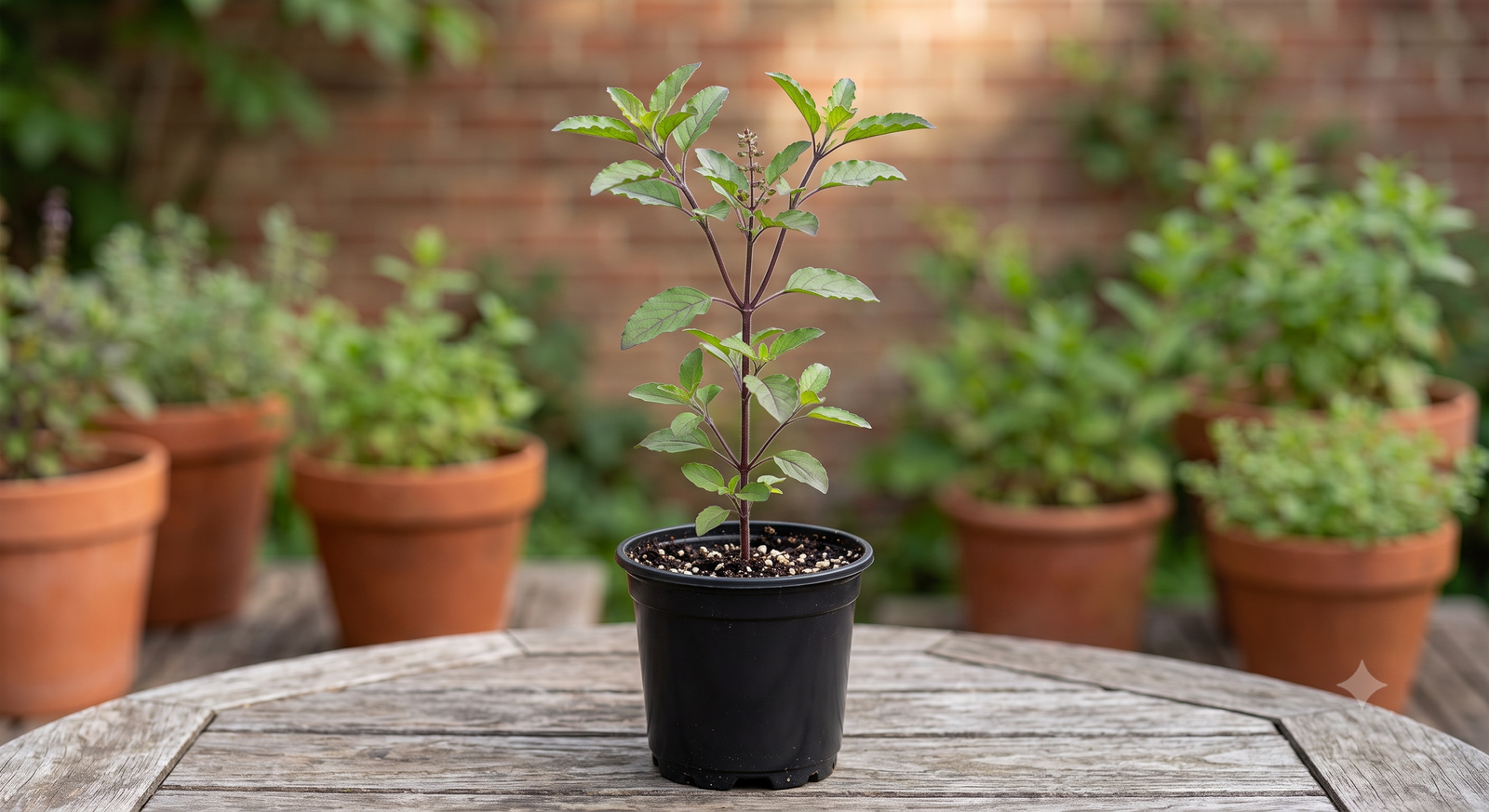
Plant Description
-
Foliage: Bright green, oval-shaped leaves with finely serrated edges and subtle purple stems.
-
Growth Habit: Semi-woody, bushy herb that typically grows 1 to 2 feet tall.
-
Aroma & Flavor: Mild, sweet, clove-like scent with a slightly mellow and peppery flavor compared to Krishna Tulsi.
-
Flowers: Small, delicate purple or magenta flower spikes (manjaris) that bloom at the stem tips.
-
Significance: Highly revered in Indian tradition for its spiritual, air-purifying, and adaptogenic medicinal properties.
Plant Care Guide
Sunlight
-
Requires 4 to 6 hours of direct sunlight daily for healthy foliage.
-
Place near a south- or east-facing balcony or window if grown indoors.
Watering
-
Water when the top inch of soil feels dry.
-
Keep soil consistently moist, but avoid waterlogging or leaving standing water in the drainage tray, which causes root rot.
-
Reduce watering during the winter months.
Soil & Potting
-
Use a rich, well-draining potting mix (e.g., 50% garden soil + 30% vermicompost/cow manure + 20% sand or perlite).
-
Ensure the container has bottom drainage holes.
Temperature & Environment
-
Thrives in warm, tropical temperatures between 20°C and 35°C.
-
Protect from extreme cold, frost, and chilly drafts during winter months.
Pruning & Pinching
-
Pinch off the top leaf pairs regularly to promote a bushier, fuller plant instead of tall, leggy growth.
-
Snip off flower spikes (manjaris) as they appear to redirect energy back into dense leaf growth.
Fertilizer
-
Feed with organic compost, vermicompost, or liquid seaweed extract once every 4 weeks during active growth (spring through autumn).
-
Avoid harsh chemical fertilizers.
Pest Control
-
Inspect occasionally for aphids or spider mites.
-
Spray diluted neem oil solution (1 tsp neem oil + a few drops of liquid dish soap per liter of water) once every few weeks as a natural preventive.
Reviews
There are no reviews yet.