
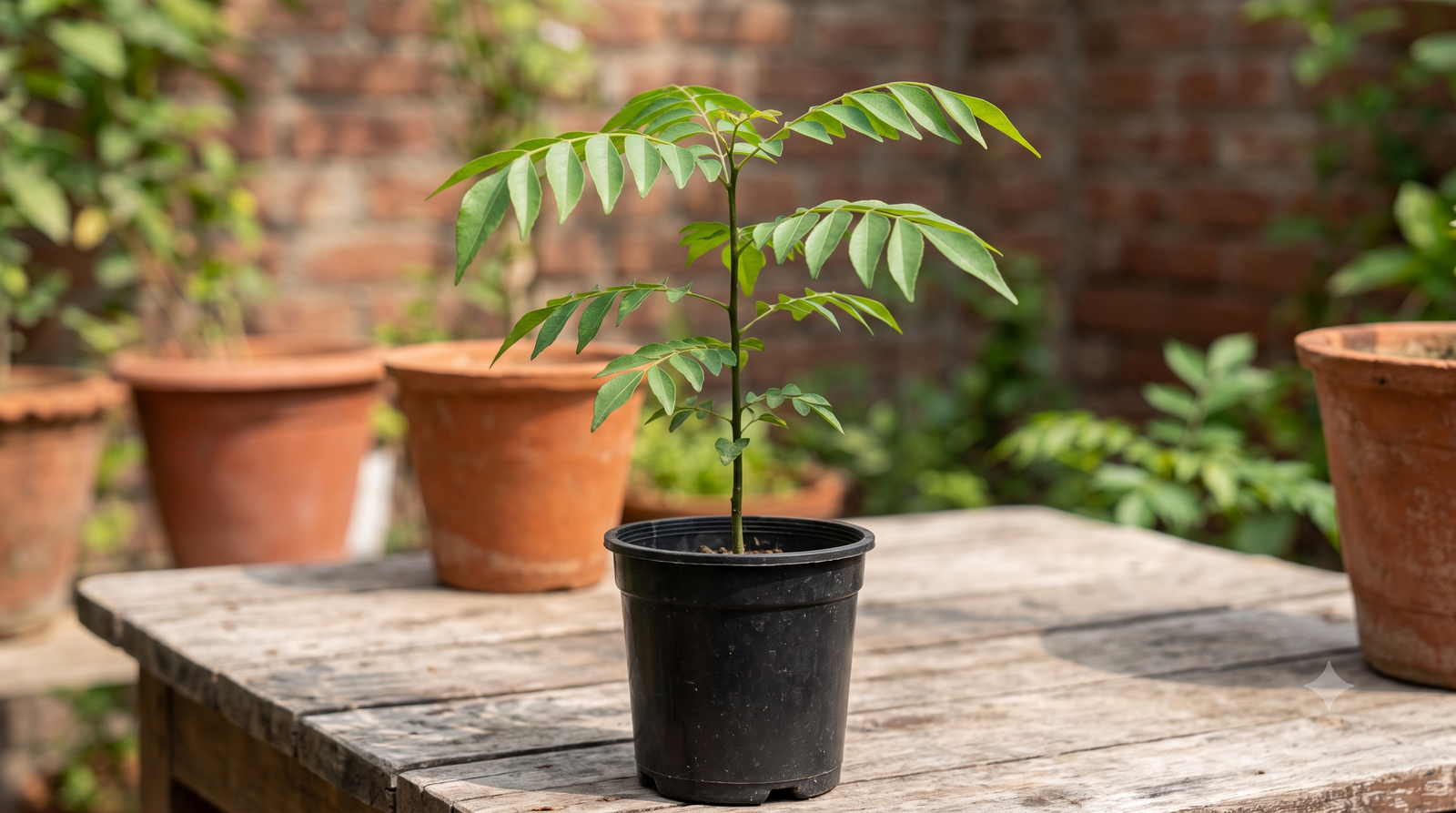
Plant Description
-
Foliage: Bright green, pinnate leaves with 11 to 21 small, pointed leaflets arranged along a main leaf stem.
-
Aroma & Flavor: Distinctive, pungent, citrusy, and warm herbal aroma when crushed or cooked.
-
Growth Habit: Semi-woody shrub or small tree that can reach 6 to 15 feet in the ground, but typically stays 1 to 3 feet tall when grown in small indoor/outdoor pots.
-
Flowers & Berries: Produces small, fragrant white flowers followed by small, round berries that ripen from green to dark purple-black.
-
Significance: Packed with essential oils, antioxidants, and nutrients like iron, folic acid, and vitamin A.
Plant Care Guide
Sunlight
-
Thrives in 6 to 8 hours of direct sunlight daily for robust growth and rich essential oil production.
-
If grown indoors, keep it near a sunny south- or west-facing window.
Watering
-
Allow the top inch of soil to dry out completely between waterings.
-
Water deeply until liquid drains from the bottom, then remove excess drained water.
-
Avoid overwatering, as Curry Leaf plants are prone to root rot in soggy soil.
Soil & Potting
-
Requires light, well-draining, slightly acidic soil (pH 6.0 to 6.5).
-
Ideal mix: 40% garden soil, 30% compost/vermicompost, 20% sand or perlite, and 10% coco peat.
-
Ensure the container has adequate drainage holes.
Temperature & Environment
-
Prefers warm temperatures between 20°C and 35°C.
-
Highly sensitive to cold; protect from temperatures below 10°C or frosty drafts, which can cause leaf drop.
Fertilizer & Soil Acidifiers
-
Feed with a nitrogen-rich organic fertilizer (like vermicompost) every 3–4 weeks during active growth in spring and summer.
-
Buttermilk/Sour Curd: Dilute 1–2 tablespoons of sour curd or buttermilk in a liter of water and apply once a month to boost soil acidity and nutrient absorption.
Pruning & Harvesting
-
Prune the main stem top regularly to encourage lateral branching and a bushy appearance.
-
Harvest entire leaf stems (rachis) rather than plucking individual leaf tips.
Pest Control
-
Inspect for common pests like scale insects, mealybugs, and psyllids.
-
Treat infestations early by spraying a mixture of diluted neem oil (1 tsp neem oil + a few drops of dish soap per liter of water) every 2 weeks.

Reviews
There are no reviews yet.